North Carolina LLC Taxes: What Owners Need to Check

This article is provided for general informational and educational purposes only. It is not legal advice, does not create an attorney-client relationship, and should not be relied upon as a substitute for consultation with a qualified attorney or tax professional. Business formation requirements vary by state, and you should verify the laws that apply to your business before making legal or tax decisions.
North Carolina LLC tax obligations depend on federal classification, business activity, and state tax registrations. Review income, sales, withholding, and annual report rules separately.
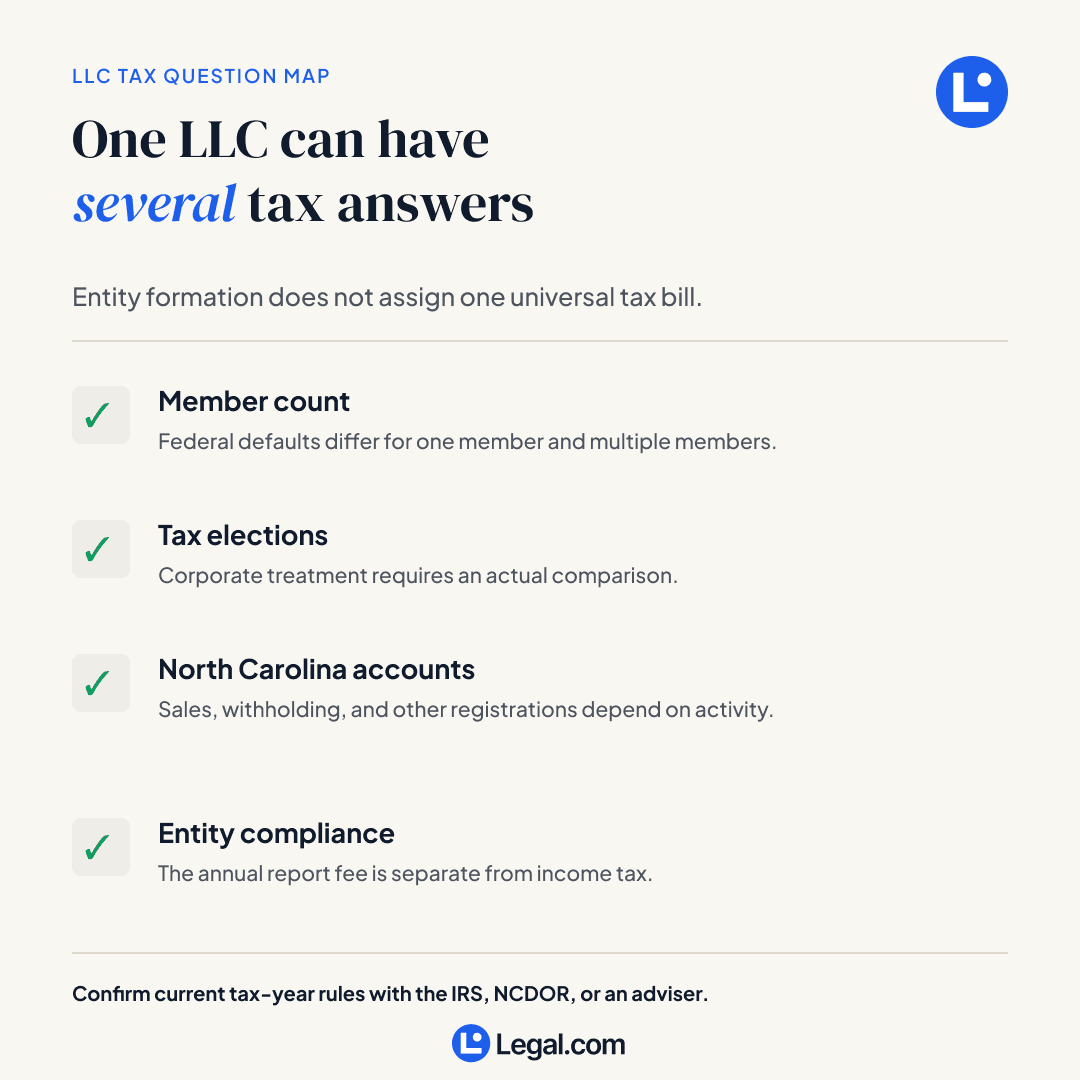
Forming a North Carolina LLC does not assign one universal tax bill. Federal income tax treatment depends on the LLC's number of members and any tax election; state income, sales, withholding, and other obligations depend on what the business does. The Secretary of State's annual report fee is a separate compliance cost, not an income tax.

Start with federal classification
The IRS LLC classification guide says a domestic LLC with one member is generally disregarded for federal income tax unless it elects corporate treatment. With two or more members, the default is generally partnership treatment unless the LLC elects corporate treatment. A single-member LLC can still be treated separately for certain employment and excise taxes. Confirm the actual classification and elections before deciding which return to file.
An EIN is a federal identifier, not a tax classification or a state business license. The IRS issues EINs without a fee. A change in owners or tax treatment can alter filing obligations, so have a tax professional review transitions before the next return is due.
Check North Carolina tax accounts
Review the North Carolina Department of Revenue's business registration information to identify accounts the LLC must open. A seller may need sales and use tax registration based on its transactions; the Department explains who should register. An employer should examine withholding and employment tax obligations. Other programs may apply to particular products or activities.
State income and corporate filing questions depend on the federal classification and North Carolina rules. The Department's corporate filing requirements show why it is unsafe to tell every LLC that it owes, or never owes, corporate income or franchise tax. Confirm the current tax-year forms and rates directly with the Department. Do not copy a prior year's rate into a multiyear budget.
Budget for entity compliance too
For an ordinary North Carolina LLC, the Secretary of State says the first annual report is due April 15 of the year after formation. The annual-report page lists filing methods and their current charges, including a $200 paper filing fee and added electronic transaction charges. A professional LLC may follow different annual-report rules; check the entity type before assuming this schedule applies.
Does an LLC automatically avoid double taxation? No. Tax outcomes depend on classification, elections, ownership, and the specific tax. Compare the alternatives with a tax adviser using the business's projected income.
Is sales tax due because the LLC was formed? Formation alone does not answer that question. Review the actual goods, services, customers, and transactions against the Department's registration guidance.
Legal.com Liability Disclaimer
All content published by Legal.com is provided for general informational purposes only. It is not legal advice, does not constitute a legal opinion, and should not be relied upon as a substitute for consultation with a qualified attorney. No attorney-client relationship is created by reading this article, using Legal.com templates, or contacting Legal.com. Legal.com disclaims all liability for actions taken or not taken based on this publication.