The Hidden Disadvantages of an LLC: Why the "Corporate Shield" Isn't Bulletproof

This article provides general information for educational purposes only. It is not legal advice, does not create an attorney-client relationship, and should not be relied upon as a substitute for consultation with a qualified attorney. Laws vary by state, and individualized guidance is recommended.
The LLC shield works only if you respect it.
Disclaimer: This article provides general information for educational purposes only. It is not legal advice, does not create an attorney-client relationship, and should not be relied upon as a substitute for consultation with a qualified attorney. Laws vary by state, and individualized guidance is recommended.
The Limited Liability Company, or LLC, is often described as the ideal middle ground in business formation. It offers liability protection similar to a corporation, while maintaining operational flexibility that feels closer to a sole proprietorship. On the surface, it sounds like the best of both worlds.
But forming an LLC is not the finish line. It is the beginning of a set of responsibilities that many business owners underestimate. From contract exposure to tax surprises and ongoing compliance obligations, the disadvantages of an LLC are real. If you started your business organically or formed an LLC quickly through an online service, understanding these risks is essential to making sure your protection actually holds up.

The Disadvantages of an LLC
Here is a list of some cons to using LLC for your business that you need to be aware of.
1. The Personal Guarantee Problem
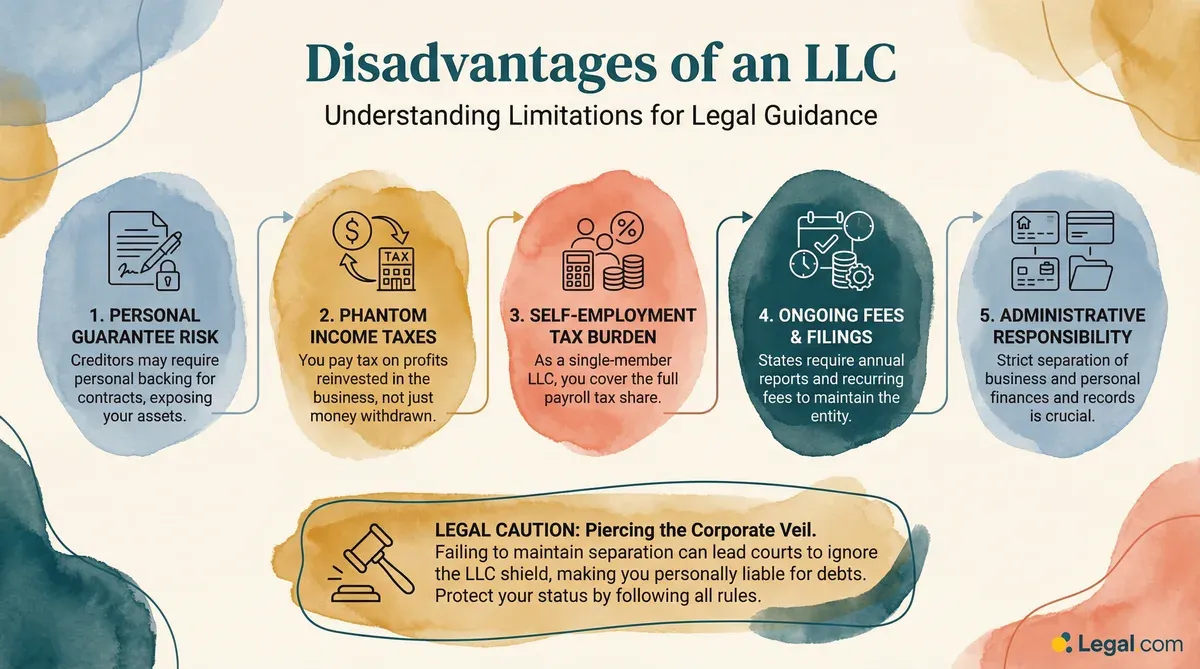
Many entrepreneurs form an LLC to protect their home, savings, and personal assets from business debts. In theory, that protection exists. In practice, it often weakens the moment you sign your first major contract.
New or small LLCs typically have little credit history and few assets. As a result, banks, landlords, and vendors frequently require a personal guarantee. When you sign one, you are agreeing to be personally responsible if the business cannot pay. That means the creditor can pursue your personal assets directly, even though you formed an LLC.
It is also important to understand the difference between contract liability and personal wrongdoing. An LLC may shield you from certain business debts, but it does not protect you from your own professional negligence. If you personally make a serious mistake that causes harm, you can still be held accountable. The LLC protects against some risks, but it is not a blanket shield.
2. Phantom Income and Tax Surprises
By default, an LLC is treated as a pass through entity for tax purposes. This means the business itself does not pay income tax. Instead, profits are reported on the owners’ personal tax returns.
This structure can create what many business owners call phantom income. You may owe taxes on your share of the company’s profits even if you did not actually withdraw that money from the business. If profits are reinvested into equipment, marketing, or expansion, you could still face a tax bill based on the full amount earned.
This creates a cash flow challenge. You might have a tax obligation tied to money that remains in the business. For companies focused on growth and reinvestment, this can feel especially frustrating.
3. Self Employment Tax Exposure
Another overlooked cost is self employment tax. When operating as a single member LLC without a special tax election, you are generally treated as self employed. That means you are responsible for the full amount of payroll taxes that would normally be split between employer and employee.
On higher profits, this can represent a significant additional burden. Some businesses eventually elect to be taxed differently in order to reduce the portion of income subject to these taxes, but that choice comes with added complexity and administrative obligations.
4. Piercing the Corporate Veil
The liability protection of an LLC depends on treating the business as a separate legal entity. Courts sometimes refer to this protection as a corporate veil. If you fail to respect that separation, the veil can be pierced, meaning you could become personally liable for business debts.
Common triggers include mixing personal and business funds, failing to maintain basic company records, ignoring required state filings or reports, and operating without adequate capital or insurance. Using a business account for personal expenses without proper documentation, or signing contracts in your personal name instead of as a company representative, may seem minor. Over time, however, these habits can undermine the very shield you created.
5. Ongoing State Fees and Compliance
The cost of forming an LLC is not limited to the initial filing. Many states require annual reports or recurring fees simply for the privilege of maintaining the entity. In some jurisdictions, these fees apply even if the business earns little or no revenue.
For small side ventures or early stage businesses, these ongoing costs can feel disproportionate. Compared to a sole proprietorship, which may not carry the same recurring entity level fees, an LLC can represent a meaningful financial commitment each year.
6. Administrative Responsibility
An LLC requires discipline. Separate bank accounts must be maintained. Contracts should be signed properly in the company’s name. Annual filings must be submitted on time. Registered agent information must remain current.
These tasks may seem small individually, but together they form the backbone of your liability protection. Skipping them weakens your structure.
Actionable Takeaways and Conclusion
An LLC can be a powerful tool, but it is not automatic protection. It works only when maintained properly.
To strengthen your position, review contracts carefully to understand where personal guarantees may exist. Keep business and personal finances strictly separate at all times. Plan for taxes in advance so you are not surprised by obligations tied to reinvested profits. Stay current with annual filings and compliance requirements so your legal protection remains intact.
The value of an LLC lies in consistent administrative discipline. When treated properly, it can offer meaningful protection. When neglected, it can create a false sense of security.
If you are unsure whether your current structure truly protects you, consulting with a qualified attorney or tax professional can help you evaluate your risks and responsibilities.
Legal.com Liability Disclaimer
All content published by Legal.com is provided for general informational purposes only. It is not legal advice, does not constitute a legal opinion, and should not be relied upon as a substitute for consultation with a qualified attorney. No attorney-client relationship is created by reading this article, using Legal.com templates, or contacting Legal.com. Legal.com disclaims all liability for actions taken or not taken based on this publication.